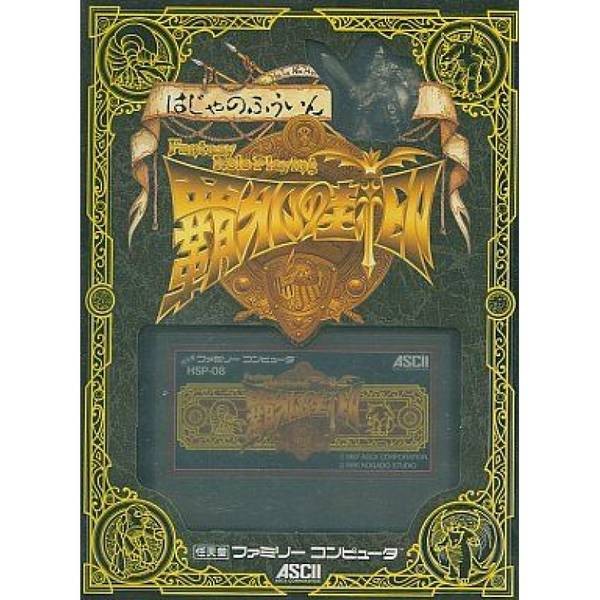
霸邪封印 / 霸邪之封印

由 工畫堂工作室(KOGADO)開發,並由 ASCII 於 1987 年 10 月 23 日在任天堂 Famicom(紅白機)上推出的《霸邪之封印》(Haja no Fuuin / 覇邪の封印),是紅白機早期 RPG 類型中極具野心且風格異常冷峻的一部代表作。最初誕生於 PC 平台,移植至家用主機後,憑藉其獨樹一幟的「迷霧探索」系統、近乎苛刻的難度曲線,以及濃厚的中世紀奇幻神祕氛圍,在玩家之間留下「傳說級硬核作品」的深刻印象。
在技術與設計層面,可說是對 8 位元主機極限的一次大膽挑戰。採用俯瞰視角呈現,但畫面中央僅顯示極為有限的可視範圍,四周則被象徵未知與危險的黑色迷霧所籠罩。這種設計不僅強化了探索時的壓迫感,也徹底改變玩家對地圖的理解方式。整體美術風格偏向寫實且略帶陰暗,城鎮與迷宮圖像帶有濃厚的古典奇幻氣息,而背景音樂則營造出一種沉重、孤寂甚至壓抑的氛圍,讓玩家在冒險過程中始終感受到潛藏的危機。值得一提的是,當年實體卡帶附贈的大型紙本地圖與金屬模型並非單純收藏品,而幾乎是遊戲進行的必要輔助工具,顯示出本作對玩家資訊掌握能力的高度要求。
故事舞台設定於名為「伊爾門斯」的古老大陸。數百年前被封印的邪惡勢力隨著時間流逝逐漸甦醒,魔物再次侵蝕世界。玩家扮演傳說勇者的後裔,肩負加固封印並擊敗魔王「泰坦」的重大使命。劇情採取開放式探索結構,需在廣闊大陸中尋找夥伴、收集關鍵裝備與神祕道具,逐步拼湊出對抗黑暗的力量。這並非單純線性推進的冒險,而是一段充滿未知與試錯的史詩旅程。
在遊戲機制方面,展現出與同期作品截然不同的設計哲學。最核心的特色在於「視野控制」與「資訊依賴」。初期玩家的可見範圍極其有限,必須透過道具或成長逐步擴展視野,否則極容易迷失方向甚至誤入高危險區域。因此,往往需要同時對照遊戲畫面與實體地圖,形成一種跨越現實與虛擬的操作體驗。戰鬥系統則採回合制,但強調高度風險管理,敵人強度提升迅速,一旦判斷失誤便可能全盤皆輸。遊戲中還設有「名聲」系統,玩家的行為會影響世界對其的反應,若濫殺無辜,將導致城鎮功能受限甚至影響劇情推進,這在當時可說是相當前衛的設計。
此外,具備晝夜循環與資源管理機制。夜晚的敵人更加強大,迫使玩家必須妥善規劃行動節奏,在白天推進探索並於夜間尋求庇護。燈油、食物等資源的消耗亦直接關係到生存與否,使整體遊戲更接近一種「生存模擬」而非單純的角色扮演。
在市場評價上,呈現明顯的兩極化傾向。一方面,評論界高度肯定其創新的探索機制與深沉世界觀,認為它成功營造出前所未有的沉浸感與真實感;另一方面,其極端嚴苛的設計——包括狹窄視野、高遇敵率以及對錯誤幾乎零容忍的懲罰——也讓許多玩家望而卻步。正因如此,常被視為一部「玩家篩選機」,只有具備高度耐性與探索精神的玩家才能真正體會其魅力。
時至今日,《霸邪之封印》依然被公認為紅白機時代「硬派 RPG」的代表之一。它那種毫不妥協的設計理念與強烈個性,使其在遊戲史上佔據了一席獨特的位置,也成為許多資深玩家心中難以忘懷的經典「邪典之作」。
Developed by Kogado Studio and published by ASCII, Haja no Fuuin (覇邪の封印) was released on October 23, 1987, for the Nintendo Famicom (NES). It stands as one of the most ambitious and uncompromisingly “hardcore” RPGs of the early console era. Originally created for PC platforms, its transition to the Famicom brought with it a uniquely harsh design philosophy, defined by its signature “fog-of-war exploration” system, punishing difficulty curve, and a dark, medieval fantasy atmosphere that left a lasting impression on players as a near “legendary-level” challenge.
From a technical and design perspective, Haja no Fuuin pushed the limits of 8-bit hardware. The game uses a top-down perspective, but restricts the player’s visible range to a tiny area around the character, with the rest of the map obscured by darkness. This design creates a constant sense of tension and uncertainty, fundamentally reshaping how players navigate the world. Visually, the game adopts a subdued, almost somber tone, with towns and dungeons rendered in a style that evokes classic Western fantasy. The music further reinforces the atmosphere, carrying a heavy, lonely, and oppressive mood that underscores the danger of venturing into forbidden lands alone. Notably, the original physical release included a large printed map and a metal figurine, which were not merely collectibles but practically essential tools—without them, surviving the game’s obscured world was extremely difficult.
The story takes place on the ancient continent of Ilmens, where an evil force sealed away centuries ago is beginning to resurface as the power of the seal weakens. Monsters once again spread across the land, threatening its existence. The player assumes the role of a descendant of a legendary hero, tasked with reinforcing the seal and ultimately defeating the demon lord Titan. Rather than following a strictly linear narrative, the game emphasizes open-ended exploration. Players must traverse the vast world, recruit companions, and gather powerful weapons and mysterious artifacts. The journey is less about guided storytelling and more about piecing together a grand quest through discovery, trial, and error.
Mechanically, Haja no Fuuin diverges sharply from its contemporaries, such as Dragon Quest, by emphasizing survival and information management. The most defining feature is its restrictive field of vision, which forces players to gradually expand their visibility through items or progression. Without this, it is easy to become lost or wander into deadly areas. As a result, players often rely on both the in-game display and the real-world map simultaneously, creating a unique hybrid gameplay experience. Combat is turn-based but highly unforgiving, with enemy strength escalating rapidly and mistakes carrying severe consequences. The game also introduces a “reputation” system: players’ actions influence how the world reacts to them. Killing certain creatures can lower reputation, causing townspeople to withhold information or services, and even blocking key story progression—an advanced concept for its time.
In addition, the game features a day-night cycle and resource management elements. Enemies grow significantly stronger at night, requiring players to carefully plan their movements and seek safety before darkness falls. Managing supplies such as lamp oil and food is essential to survival, further reinforcing the game’s identity as a harsh, survival-oriented RPG rather than a straightforward adventure.
Upon release, Haja no Fuuin received highly polarized reception. Critics praised its innovative exploration mechanics and deeply immersive world-building, recognizing it as a bold and intellectually demanding RPG. However, its extreme difficulty—narrow initial vision, high encounter rates, and near-zero tolerance for mistakes—proved overwhelming for many players. As a result, it earned a reputation as a “player filter,” appealing primarily to those with exceptional patience and a love for challenge.
Today, Haja no Fuuin is widely regarded as a defining example of the “hardcore RPG” philosophy on the Famicom. Its uncompromising design and distinctive identity have secured it a unique place in gaming history, remembered by veteran players as a cult classic that continues to challenge and fascinate decades later.
運費計算方式:
貨款滿1000元運費外加90元
貨款1000以下:買1件運費外加 60元,買2件運費外加 70元,
買3件運費外加 80元 ,買4件運費外加 90元
貨到付款外加30元手續費
外島及大陸地區運費另計
付款方式:
線上刷卡:本站採用Paypal線上刷卡
虛擬帳號匯款:屬於您專屬的虛擬帳戶,方便站長查帳使用,本站強力推薦
實體ATM匯款:請將匯款帳號記錄下來至各大銀行ATM提款機轉帳
超商條碼繳費:請列印本站提供的條碼至四大超商繳費
線上轉帳:透過玉山銀行線上ATM轉帳(此系統只支援IE瀏覽器)
貨到付款:本站採用黑貓宅急便貨到付款
其他注意事項:
如需購買線上點數卡請直接跟站長連絡,本站不提供點數卡的線上付款