魔洞戰紀

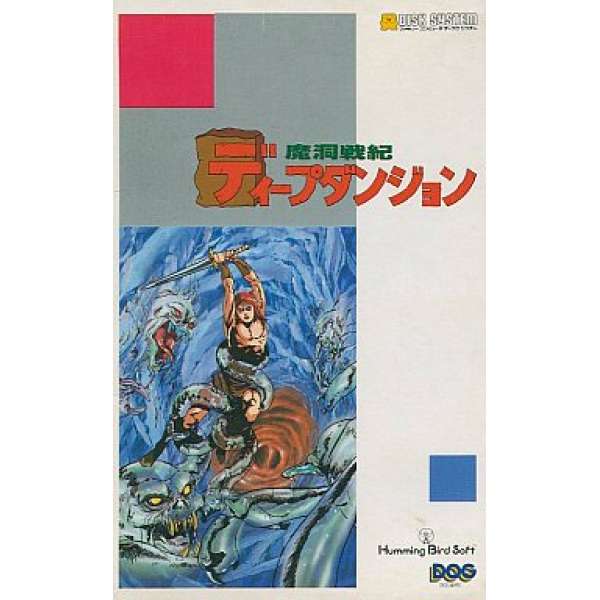
《魔洞戰紀》(Deep Dungeon / 魔洞戦記 ディープダンジョン)由 HummingBird Soft 開發,並於 1986 年 12 月 19 日由 DOG(Disk Original Group,由 Square 等公司組成的聯盟)在任天堂 Famicom Disk System(磁碟機系統)上推出,是家用主機史上最早期的「第一人稱 3D 迷宮探索 RPG」代表作之一。在《勇者鬥惡龍》剛定義日式 RPG 的年代,本作選擇向電腦平台經典《巫術》(Wizardry)致敬,以其極度壓抑的幽默感與深不見底的地下城設計,成為許多老玩家心目中的「迷宮惡夢」。
在技術表現上,挑戰 8 位元主機處理 3D 空間的極限。採用第一人稱視角,在探索時會看到由線條構成的走廊與門扉。迷宮內部極其單調且重複,刻意營造出強烈的幽閉恐懼感與迷失感。戰鬥畫面則切換到靜態敵方點陣圖,雖然動作不多,但怪物造型充滿陰森奇幻色彩。音樂利用磁碟機特有的音源擴充頻道,旋律空靈而憂傷,與陰暗地下城氛圍完美契合。
故事背景設定在一個曾經繁榮的王國。邪惡魔王侵襲大地,不僅奪走象徵王權的聖劍,還將公主囚禁在深不見底的地下迷宮底部。玩家扮演無名冒險者,為了名聲、財富以及拯救王國的使命,獨自(或後續加入夥伴)踏入這座被咒語封印的魔洞。劇情敘述簡潔,大部分細節透過迷宮中偶遇的倖存者對話或石碑銘文揭示,呈現出一個關於「孤獨、生存與墜落」的傳奇,最終目標是穿越八層陷阱重重的地獄,在地底與魔王展開最終決戰。
操作機制與當時俯視角 RPG 完全不同,需具備高度空間感與嚴謹探險邏輯。迷宮採第一人稱 3D 步進式探索,每按一次方向鍵,畫面就推進一格。迷宮牆面幾乎一模一樣,還有單向門、傳送點與旋轉陷阱,玩家通常需要使用方格紙進行手動繪圖,否則極易迷路。戰鬥採回合制指令操作,初期難度極高,玩家常在剛離開城鎮幾步就被小怪秒殺,因此撤退與補給策略非常重要。磁碟機版存檔便利,但仍需頻繁換面讀取,形成特有的遊戲節奏。
城鎮與迷宮之間亦有垂直互動。隨著深入迷宮,物價與情報會改變,需謹慎管理金錢,優先購買火把與藥品,因為在深層迷宮中失去光源等同於死亡。
以高難度與沉浸氛圍受到高度評價。評論認為它成功將 PC 端的硬派 3D 迷宮玩法帶入家用主機,雖然畫面簡單,但深度玩法吸引大量追求挑戰的玩家。對一般玩家來說,高遇敵率與迷宮設計或許過於嚴苛,但作為磁碟機早期的原創 RPG 傑作,它催生多部續作。此作被公認為「日式迷宮 RPG」的拓荒者,其冷酷神秘的風格在 RPG 發展史上佔據獨特地位。
Deep Dungeon (魔洞戦記 ディープダンジョン) was developed by HummingBird Soft and released on December 19, 1986, for the Nintendo Famicom Disk System by DOG (Disk Original Group, an alliance that included companies such as Square). It stands as one of the earliest examples of a “first-person 3D dungeon exploration RPG” on home consoles. At a time when Dragon Quest was just defining the Japanese RPG genre, Deep Dungeon chose a hardcore approach, paying homage to the computer classic Wizardry. With its oppressive sense of humor and bottomless dungeon design, it earned a reputation among veteran players as a true “labyrinth nightmare.”
In terms of technical execution, Deep Dungeon pushed the limits of 8-bit hardware in rendering a 3D spatial experience. The game employs a first-person perspective, displaying corridors and doors composed of simple line graphics. Its intentionally repetitive and minimalistic visual design creates a strong sense of claustrophobia and disorientation. During battles, the screen switches to static enemy sprites. While movement is limited, the monsters’ designs are darkly fantastical. The game’s music, enhanced by the Disk System’s expanded audio channels, has an ethereal and melancholy quality that perfectly complements the dungeon’s ominous atmosphere.
The story is set in a once-prosperous kingdom now under siege by an evil demon king. The monarch’s sacred sword has been stolen, and the princess is imprisoned at the bottom of an infinitely deep underground labyrinth. Players assume the role of an unnamed adventurer, who, driven by fame, fortune, and the mission to save the kingdom, descends alone—or with companions recruited later—into the cursed dungeon. Narrative details are sparse, often revealed through occasional survivor dialogue or inscriptions on stone monuments. The game tells a tale of solitude, survival, and descent, culminating in an epic confrontation with the demon king after traversing eight treacherous dungeon floors.
Gameplay mechanics are radically different from the overhead-view RPGs of the era, demanding precise spatial awareness and meticulous exploration logic. Players navigate the dungeon step by step in first-person 3D: each press of a directional button moves the player one square forward. The labyrinth’s identical walls, one-way doors, teleportation points, and rotating traps require players to manually map their progress, often using graph paper to avoid becoming completely lost. Combat is turn-based and punishing, emphasizing careful retreat and resource management. Early encounters frequently result in instant death, necessitating repeated returns to town to restore health and save progress. The Disk System’s save feature made this easier but still required frequent disk swapping, creating a unique gameplay rhythm.
There is also a vertical interaction between town and dungeon. As players descend deeper, prices and available information change, requiring careful money management and prioritization of torches and potions. Losing a light source in the deeper floors is often tantamount to death.
Deep Dungeon was highly regarded for its uncompromising difficulty and immersive atmosphere. Critics praised it for successfully bringing the hardcore 3D dungeon experience from PC to home consoles. While its graphics were simple, its deep gameplay captured a dedicated fanbase seeking challenge. For general audiences, the high encounter rates and labyrinthine design could be unforgiving, but as one of the Disk System’s early original RPGs, it spawned multiple sequels. It is widely recognized as a pioneer of Japanese dungeon RPGs, its cold and mysterious tone carving out a distinctive place in the history of RPG development.
運費計算方式:
貨款滿1000元運費外加90元
貨款1000以下:買1件運費外加 60元,買2件運費外加 70元,
買3件運費外加 80元 ,買4件運費外加 90元
貨到付款外加30元手續費
外島及大陸地區運費另計
付款方式:
線上刷卡:本站採用Paypal線上刷卡
虛擬帳號匯款:屬於您專屬的虛擬帳戶,方便站長查帳使用,本站強力推薦
實體ATM匯款:請將匯款帳號記錄下來至各大銀行ATM提款機轉帳
超商條碼繳費:請列印本站提供的條碼至四大超商繳費
線上轉帳:透過玉山銀行線上ATM轉帳(此系統只支援IE瀏覽器)
貨到付款:本站採用黑貓宅急便貨到付款
其他注意事項:
如需購買線上點數卡請直接跟站長連絡,本站不提供點數卡的線上付款