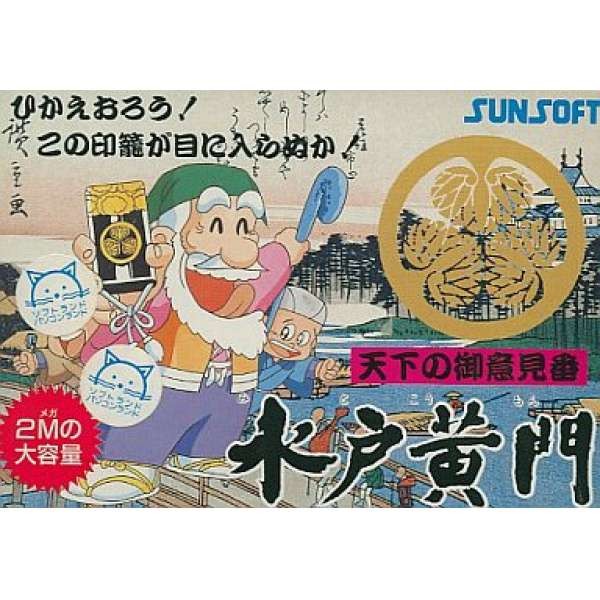
水戶黃門

Sunsoft於 1987 年 8 月 11 日在任天堂 Famicom(紅白機)上推出的《水戶黃門:天下之御意見番》(Mito Koumon / 天下の御意見番 水戸黄門),是改編自日本國民級長壽時代劇 水戶黃門 的動作推理冒險遊戲。
在當時的紅白機市場中,這是一款相當罕見的作品,成功將「搜查推理」與「橫向捲軸動作」兩種截然不同的玩法融合在一起。它不僅忠實還原電視劇中「微服出巡」的核心魅力,也完整重現觀眾最熟悉、最期待的經典橋段——亮出印信的那一刻。
遊戲在整體設計上充滿濃厚的江戶時代氛圍。角色採用可愛的二頭身(SD)比例呈現,場景則橫跨日本各地,從江戶、京都到大阪與長崎,各地的地標與地方特色都被融入關卡之中。音樂方面更是一大亮點,收錄經典主題曲 ああ人生に涙あり,當旋律響起時,往往能喚起玩家強烈的情感共鳴。
劇情完全承襲原作公式。主角水戶光圀(黃門公)以退休副將軍的身分,與助三郎、格之進、彌七與阿銀一同隱姓埋名、周遊列國。每到一地,總會發現當地官員或惡霸欺壓百姓的情況。玩家需要在有限的時間內蒐集證據、釐清事件真相,最終揭穿壞人的陰謀,恢復地方的秩序。
在玩法上,採取雙重結構交替進行。一方面是偏向文字與互動的「情報搜查」,玩家需要進入民宅或店鋪與 NPC 對話,蒐集證言,有時甚至必須持有特定道具才能觸發關鍵線索;另一方面則是「街道動作」,在移動過程中會遭遇流氓或惡徒,需操作助三郎或格之進進行近身戰鬥。必要時還可以呼叫彌七投擲苦無進行遠距支援,使戰鬥更具變化性。
整個流程中最具壓力的設計,是每一關都有明確的時間(天數)限制。如果未能在期限內蒐集齊證據,黃門公就會因「失了面子」而直接判定失敗。這樣的設計讓玩家在探索與推理時始終保持緊張感。
而遊戲最經典、也最令人難忘的,無疑是最終的「印信系統」。當劇情推進至高潮,壞人質問主角身分時,只需按下按鈕,讓格之進亮出象徵權威的葵紋印信。畫面隨即定格,所有敵人當場跪地求饒,配合主題曲響起,帶來極強的戲劇張力與爽快感。這一幕不只是遊戲機制,更是對原作精神的完美再現。
在市場評價方面,被認為是早期影視改編遊戲中的優秀範例。評論普遍認為 Sunsoft 成功抓住原作的靈魂,雖然搜查流程偶爾略顯繁瑣,但整體節奏與最終回報極具吸引力。同時,也在無形中介紹日本各地的文化與特產,對當時的玩家而言兼具娛樂與教育意義。
時至今日,《水戶黃門:天下之御意見番》依然被視為紅白機時期「創意與情懷兼具」的代表作之一。而那一幕——在壞人面前亮出印信、看著對方瞬間崩潰跪地的瞬間——也成為無數玩家心中無可取代的經典回憶。
Released on August 11, 1987, by Sunsoft for the Famicom, Mito Kōmon: Tenka no Goikenban is an action-adventure title based on the long-running Japanese period drama Mito Kōmon.
At a time when most Famicom games leaned heavily toward pure action or simple mechanics, this title stood out by blending investigative storytelling with side-scrolling combat. It didn’t just borrow the setting of the TV series—it faithfully recreated its spirit, especially the iconic “reveal” scene that audiences had come to expect.
The game’s presentation is steeped in Edo-period atmosphere. Characters are rendered in a charming super-deformed (SD) style, while stages span famous locations across Japan, including Edo, Kyoto, Osaka, and Nagasaki, each reflecting local culture and scenery. The audio design further strengthens immersion by incorporating the well-known theme song Aa Jinsei ni Namida Ari, instantly resonating with fans of the series.
Narratively, the game follows the familiar formula of the original show. Tokugawa Mitsukuni, traveling in disguise as a retired vice-shogun, journeys across the country with his companions Sukesaburō, Kakunoshin, the ninja Yaeichi, and Ogin. In every region, they encounter corrupt officials or local tyrants exploiting the people. The player’s role is to gather evidence within a limited timeframe, uncover the truth, and ultimately bring justice to each case.
Gameplay alternates between two core modes. The investigation segments require players to enter houses and shops, speak with NPCs, and collect testimonies. Progress often depends on finding the right clues or triggering specific events with key items. These sections emphasize observation and memory rather than reflexes. In contrast, the action segments occur while traveling, where players control Sukesaburō or Kakunoshin to fight off enemies. Combat is straightforward but dynamic, and players can call upon Yaeichi to throw kunai for ranged support, adding variety to encounters.
A defining feature of the game is its time limit system. Each stage is governed by a set number of in-game days, and failing to gather sufficient evidence before time runs out results in an immediate game over. This creates a constant sense of urgency, pushing players to balance exploration with efficiency.
The most memorable moment comes at the climax of each case. When the villain challenges the protagonist’s identity, the player triggers the reveal by presenting the official crest. The screen freezes dramatically as the authority of the emblem is unveiled, enemies fall to their knees, and the theme music swells in the background. This sequence perfectly captures the dramatic payoff of the TV series and remains one of the most satisfying moments in the game.
Critically, the game was praised for its faithful adaptation and surprisingly rich gameplay. Sunsoft was recognized for capturing the essence of the source material, and while the investigative portions could occasionally feel repetitive, the overall experience was engaging and rewarding. Additionally, its inclusion of regional elements and cultural references gave it an educational layer uncommon for games of its era.
Today, Mito Kōmon: Tenka no Goikenban is remembered as a standout example of early licensed games done right—creative, respectful of its source, and mechanically distinctive. For many players, the defining memory remains that final moment: confronting arrogant villains, revealing the crest, and watching them collapse in fear as the music rises—a timeless expression of justice served.
運費計算方式:
貨款滿1000元運費外加90元
貨款1000以下:買1件運費外加 60元,買2件運費外加 70元,
買3件運費外加 80元 ,買4件運費外加 90元
貨到付款外加30元手續費
外島及大陸地區運費另計
付款方式:
線上刷卡:本站採用Paypal線上刷卡
虛擬帳號匯款:屬於您專屬的虛擬帳戶,方便站長查帳使用,本站強力推薦
實體ATM匯款:請將匯款帳號記錄下來至各大銀行ATM提款機轉帳
超商條碼繳費:請列印本站提供的條碼至四大超商繳費
線上轉帳:透過玉山銀行線上ATM轉帳(此系統只支援IE瀏覽器)
貨到付款:本站採用黑貓宅急便貨到付款
其他注意事項:
如需購買線上點數卡請直接跟站長連絡,本站不提供點數卡的線上付款