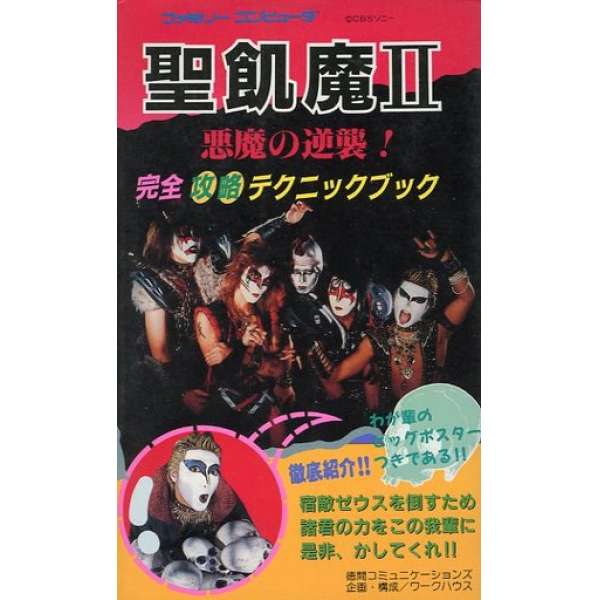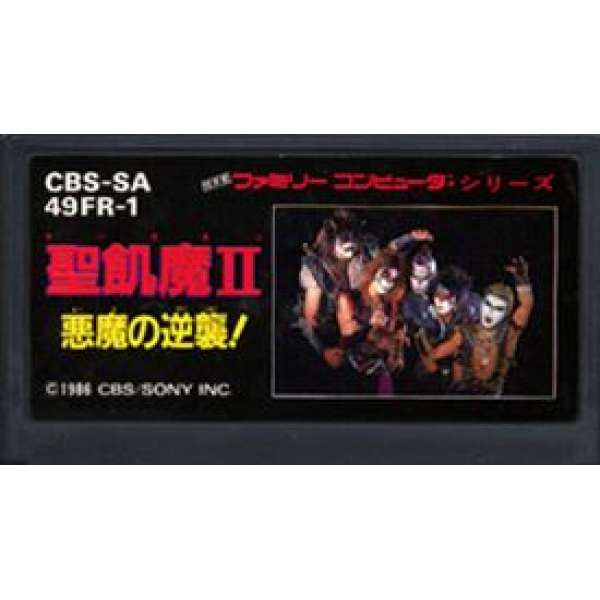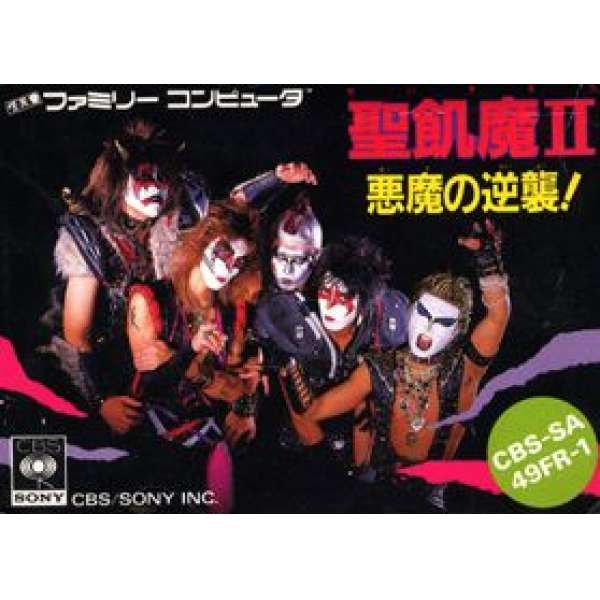
FC 聖飢魔2:惡魔的反擊 完全攻略
 1987-02-10
Sony Music(CBS/Sony)於1986年在紅白機(FC)平台推出的《聖飢魔II:惡魔的反擊》,是在電玩史上相當罕見的作品,它以真實存在的重金屬樂團「聖飢魔II」作為主角,將音樂偶像與動作遊戲結合,形成極具時代特色的跨界企劃。
這款遊戲的誕生背景與當時樂團的高度人氣密切相關,主要是為了配合專輯(二部大教典)的發行而推出的宣傳性作品。在1980年代中期的紅白機市場,大多數遊戲偏向可愛、奇幻或卡通風格,而本作卻以陰暗、宗教象徵與強烈視覺系美學為主軸,因此在當時顯得格外突出,也帶有一定的衝擊性。
劇情延續聖飢魔II一貫的世界觀設定,敘述象徵性的「大教典」被天界奪走並分別封印於四個不同區域。主角是主唱 Demon 小暮閣下,必須深入這些危險地帶,擊敗守護封印的天使與神聖生物,逐步奪回被奪走的教典,並朝著「征服地球」的惡魔使命邁進。整體敘事充滿宗教反轉與舞台劇式的誇張張力。
在玩法方面,這是難度極高的橫向捲軸動作遊戲。主角主要以發射音波作為攻擊手段,在充滿平台跳躍陷阱與敵人的關卡中前進。途中玩家可以救出其他團員,例如 Ace 清水長官與 Sgt. Luke 參謀等角色,而這些成員在被救出後會提供不同能力上的支援,使玩法帶有一定的策略性。
然而最具爭議的部分在於其極為嚴苛的設計,包括快速消耗的體力系統、緊迫的時間限制,以及敵人與地形配置所帶來的高挫折感。許多關鍵道具被隱藏在牆壁後方或特殊觸發點,使得初次遊玩的玩家往往必須反覆嘗試甚至背板才能推進進度,因此整體難度在同類型作品中屬於偏高水準。
在視覺與音樂表現上,展現出強烈風格化特色。畫面採用較為陰暗的色調設計,角色造型忠實還原 Demon 小暮閣下的舞台形象,包括其標誌性的妝容與披風,而敵方與頭目設計則大量融入宗教意象與象徵性元素。音樂方面則是遊戲最受稱道的部分,開發團隊將聖飢魔II的代表性曲目改編成紅白機8-bit音源版本,在僅有三聲道的技術限制下,仍然保留重金屬音樂的節奏感與氣勢,使整體聽覺體驗極具特色。
在市場評價上,呈現出明顯的兩極化現象。對於樂團的忠實粉絲而言,能夠直接操作 Demon 小暮閣下並在遊戲中聽到經典樂曲的8-bit版本,是極具吸引力的體驗,也具有強烈的收藏與紀念價值。然而對一般動作遊戲玩家而言,高難度與不友善設計往往帶來挫折感,使其在評價上介於「邪典佳作」與「高難度問題作」之間。
整體而言,《聖飢魔II:惡魔的反擊》不僅是一款紅白機動作遊戲,更像是聖飢魔II世界觀的一部分延伸與宣傳媒介。它呈現出1980年代日本流行文化與遊戲產業緊密結合的獨特現象,也保留了當時業界勇於實驗與突破框架的創作精神,因此至今仍被視為一款充滿時代印記與邪典魅力的作品。
Released in 1986 on the Famicom (NES) by Sony Music (CBS/Sony), Seikima-II: Akuma no Gyakushū is one of the rarest examples in video game history of a real-world heavy metal band serving as the main subject of an action game. It was developed as a cross-media promotional project tied to the release of Seikima-II’s albums, reflecting the strong synergy between Japan’s music and gaming industries during the 1980s.
At a time when most Famicom titles focused on colorful fantasy, cartoon aesthetics, or family-friendly themes, this game stood out for its dark visual identity, theatrical “visual kei” style, and overtly demonic imagery. Its tone was deliberately provocative, aligning with Seikima-II’s stage persona as a “demon band” destined to conquer the Earth.
The story follows the band’s fictional lore, in which their sacred “Great Doctrine” (a symbolic collection of their works) has been stolen by heavenly forces and sealed across four different regions. The player controls Demon Kogure, the band’s charismatic vocalist, who must infiltrate these areas, defeat angelic guardians and divine creatures, and recover the stolen doctrines to advance the band’s ultimate goal of world domination. The narrative is highly theatrical, blending parody, religious symbolism, and stage performance aesthetics.
Gameplay-wise, it is a side-scrolling action platformer known for its extreme difficulty. The protagonist attacks using sound-wave projectiles, navigating stages filled with traps, enemies, and precise platforming sections. Players can rescue other band members such as Ace Shimizu and Sgt. Luke Takamura, who provide various support abilities once freed, adding a light layer of strategy to progression.
However, the game is also infamous for its punishing design. Health depletes quickly, time limits are strict, and enemy placement is often unforgiving. Many essential items are hidden in obscure locations or behind invisible walls, forcing players to memorize stage layouts through trial and error. As a result, the learning curve is extremely steep, even by Famicom standards.
Visually, the game features a dark, stylized presentation that faithfully recreates Demon Kogure’s iconic stage appearance, including elaborate makeup and dramatic costumes. Enemy and boss designs frequently incorporate religious and mythological motifs, reinforcing the game’s controversial aesthetic direction. Despite hardware limitations, the atmosphere is consistent and distinctive.
The soundtrack is widely regarded as the game’s strongest element. Seikima-II’s heavy metal tracks were carefully adapted into 8-bit arrangements using the Famicom’s limited three-channel sound system. Even in this simplified form, the music retains its driving rhythm and metal intensity, making it one of the more memorable aspects of the experience.
Reception was sharply divided. For fans of Seikima-II, the game was a unique and exciting opportunity to control their stage personas and experience chiptune versions of their favorite songs. For general players, however, the high difficulty and unforgiving mechanics often resulted in frustration, placing it in the ambiguous category between cult classic and “kusoge” (notoriously difficult or poorly balanced game).
Overall, Seikima-II: Akuma no Gyakushū is more than just a licensed Famicom game—it is an extension of the band’s theatrical universe. It reflects the experimental spirit of 1980s Japanese pop culture, where music, performance art, and video games could merge into a single, unconventional creative expression.
運費計算方式:
貨款滿1000元運費外加90元
貨款1000以下:買1件運費外加 60元,買2件運費外加 70元,
買3件運費外加 80元 ,買4件運費外加 90元
貨到付款外加30元手續費
外島及大陸地區運費另計
付款方式:
線上刷卡:本站採用Paypal線上刷卡
虛擬帳號匯款:屬於您專屬的虛擬帳戶,方便站長查帳使用,本站強力推薦
實體ATM匯款:請將匯款帳號記錄下來至各大銀行ATM提款機轉帳
超商條碼繳費:請列印本站提供的條碼至四大超商繳費
線上轉帳:透過玉山銀行線上ATM轉帳(此系統只支援IE瀏覽器)
貨到付款:本站採用黑貓宅急便貨到付款
其他注意事項:
如需購買線上點數卡請直接跟站長連絡,本站不提供點數卡的線上付款
-
FC 聖飢魔2:惡魔的反擊 完全攻略
- 定 價: 378円
- 售 價: 0.00
- 庫存量: 0 套
- 已賣出: 0 套
人氣指數: 0 / 6 顆星