大盜伍佑衛門2

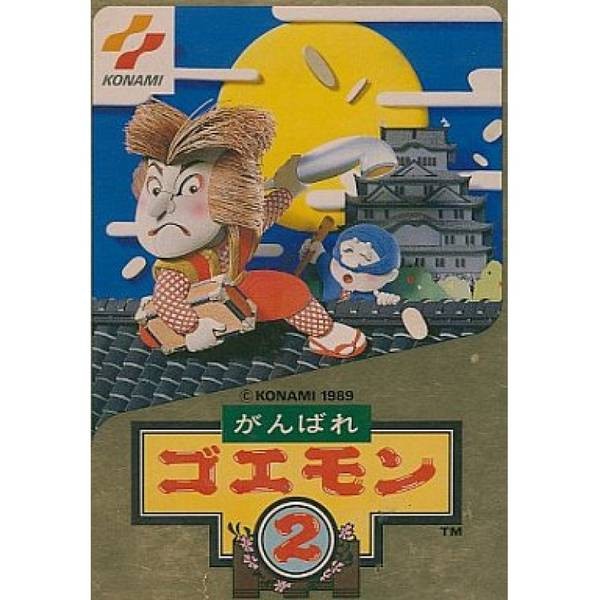
《大盜伍佑衛門 2》(がんばれゴエモン2)於1989年1月4日在Family Computer(FC/紅白機)上推出,是科樂美(Konami)旗艦動作冒險系列的第二部正統續作。延續前作的和風世界觀,在多方面進行全面進化,不僅將畫面色彩數量和細節提升到紅白機的極限,更在系列中確立極其重要的雙人合作玩法與多樣化載具系統,使其成為8位元時代動作遊戲的代表作之一。
在系統方面,作出顯著的創新。最受玩家讚譽的是首次加入的「雙人同時遊玩」模式,可以分別操控義賊伍佑衛門與其新搭檔、食量驚人的忍者惠比壽丸(Ebisumaru),這也是惠比壽丸在系列作中的初次登場。遊戲的世界地圖不再像前作單純切換關卡,而是引入類似《超級瑪利歐兄弟 3》的大地圖設計,將日本各地的風景與關卡巧妙串聯。除橫向捲軸的動作戰鬥,還保留進入民宅、商店購買道具及玩小遊戲的探索元素,極大地提升遊戲的豐富性和趣味性。
劇情方面,故事講述伍佑衛門與惠比壽丸在一次行動中發現,邪惡商人「越後屋」密謀掠奪民脂民膏,甚至企圖掌控江戶的經濟命脈。為了揭發陰謀並奪回被侵占的財寶,兩位義賊決定從九州出發,北上橫跨本州,最終直搗位於江戶的越後屋總部。劇情充滿科樂美式幽默感,將嚴肅的義賊行動轉化為一場充滿歡笑、美食與奇特敵人的日本全國大冒險,奠定系列後續作品那種「熱血卻不正經」的獨特基調。
操作設計上,在FC控制器有限的按鍵中發揮最大的潛力。伍佑衛門投擲小判金幣作為遠程武器,同時也能使用菸管進行近戰攻擊;惠比壽丸則使用笛子作為武器。這種「金錢即彈藥」的設計要求玩家在打怪賺錢與消耗攻擊之間取得平衡。首次加入載具系統,例如可駕駛的巨型機械魚,不僅改變移動方式,也為戰鬥帶來新的操作感,為後來超任時代的巨大機器人玩法鋪路。關卡中還隱藏了需要特定道具才能開啟的迷宮和門口,需在城鎮中尋找樓梯、購買增強體力的食物或取得通關必需品,將動作、探索與微量解謎巧妙融合,使遊戲節奏張弛有度。
市場上,獲得一致好評,被譽為紅白機上完成度極高的動作遊戲。評論家讚揚其精緻的場景設計,從東方風情的城下町到白雪覆蓋的北方地景,美術表現出色。雙人模式的加入使本作在社交遊戲中極受歡迎,與朋友協力闖關的樂趣遠超前作。遊戲中穿插的迷你遊戲,如賽馬和抽獎,也讓玩家在緊湊的戰鬥之餘獲得放鬆。
綜合市場評價,本作成功將動作遊戲與冒險角色扮演元素融合,難度適中,既不會讓新手感到挫折,也能滿足高手的深度挑戰。雖然畫面相比後來16位元作品略顯簡單,但在FC環境下,其流暢的動作判定與洗腦的電子三味線配樂,使《大盜伍佑衛門 2》成為無數玩家童年回憶中的經典,也正式開啟伍佑衛門作為科樂美看板角色的黃金時代。
“Ganbare Goemon 2” (がんばれゴエモン2) was released on January 4, 1989, for the Family Computer (FC/Famicom), serving as the second official installment in Konami’s flagship action-adventure series. Building upon the Japanese-themed world of its predecessor, the game underwent a comprehensive evolution, pushing the console’s color palette and visual detail to its limits. It also introduced critically important features for the series, such as cooperative two-player gameplay and a variety of rideable vehicles, establishing itself as one of the standout action titles of the 8-bit era.
In terms of gameplay systems, the game introduced significant innovations. Most praised by players was the debut of the simultaneous two-player mode, allowing one player to control the heroic thief Goemon while the other played his new partner, the gluttonous ninja Ebisumaru—marking Ebisumaru’s first appearance in the series. The world map no longer consisted of simple level transitions; instead, it adopted a large map design reminiscent of Super Mario Bros. 3, seamlessly connecting Japan’s diverse landscapes with the various stages. Beyond the classic side-scrolling action, the game retained exploration elements, such as entering houses, visiting shops for items, and engaging in mini-games, greatly enriching the gameplay experience and adding layers of fun.
The storyline follows Goemon and Ebisumaru as they uncover the schemes of the evil merchant Echigoya, who plans to exploit the populace and seize control of Edo’s economic power. To expose the conspiracy and reclaim the stolen treasures, the two thieves journey north from Kyushu across Honshu, ultimately confronting Echigoya’s headquarters in Edo. The narrative is infused with Konami-style humor, turning the serious adventures of a thief into a nationwide Japanese escapade full of laughter, food, and quirky enemies. This tone laid the foundation for the series’ signature blend of spirited heroism and playful irreverence in later installments.
The controls were designed to maximize the limited buttons of the Famicom controller. Goemon uses koban coins as a ranged weapon and can also attack with his pipe in close combat, while Ebisumaru wields a flute. This “money-as-ammunition” system requires players to balance earning coins from defeating enemies with spending them on attacks. The game also introduced rideable vehicles for the first time, such as a giant mechanical fish, which not only altered movement mechanics but also added new dimensions to combat and foreshadowed the giant robot gameplay that would appear in later Super Famicom titles. Levels also feature hidden dungeons and doors that require specific items to unlock, requiring players to explore towns for stairways, purchase stamina-boosting food, or obtain essential keys, blending action, exploration, and light puzzle-solving in a well-paced rhythm.
Upon release, Ganbare Goemon 2 received widespread acclaim and was hailed as one of the most polished action games on the Famicom. Critics praised the detailed environmental design, from the Edo-period townscapes to snowy northern landscapes, noting the game’s strong artistic presentation. The addition of cooperative play made the game a social favorite, as playing with friends was far more engaging than the previous title. Mini-games, such as horse racing and lotteries, provided players with a relaxing break from the intense action.
Overall, the game successfully merged action gameplay with adventure and role-playing elements, offering balanced difficulty that was accessible to newcomers while providing depth for experienced players. While its graphics were simpler compared to later 16-bit titles, the smooth action, responsive controls, and catchy electronic shamisen soundtrack made Ganbare Goemon 2 a cherished childhood classic for countless players. It also marked the beginning of Goemon’s golden era as Konami’s flagship character.
運費計算方式:
貨款滿1000元運費外加90元
貨款1000以下:買1件運費外加 60元,買2件運費外加 70元,
買3件運費外加 80元 ,買4件運費外加 90元
貨到付款外加30元手續費
外島及大陸地區運費另計
付款方式:
線上刷卡:本站採用Paypal線上刷卡
虛擬帳號匯款:屬於您專屬的虛擬帳戶,方便站長查帳使用,本站強力推薦
實體ATM匯款:請將匯款帳號記錄下來至各大銀行ATM提款機轉帳
超商條碼繳費:請列印本站提供的條碼至四大超商繳費
線上轉帳:透過玉山銀行線上ATM轉帳(此系統只支援IE瀏覽器)
貨到付款:本站採用黑貓宅急便貨到付款
其他注意事項:
如需購買線上點數卡請直接跟站長連絡,本站不提供點數卡的線上付款