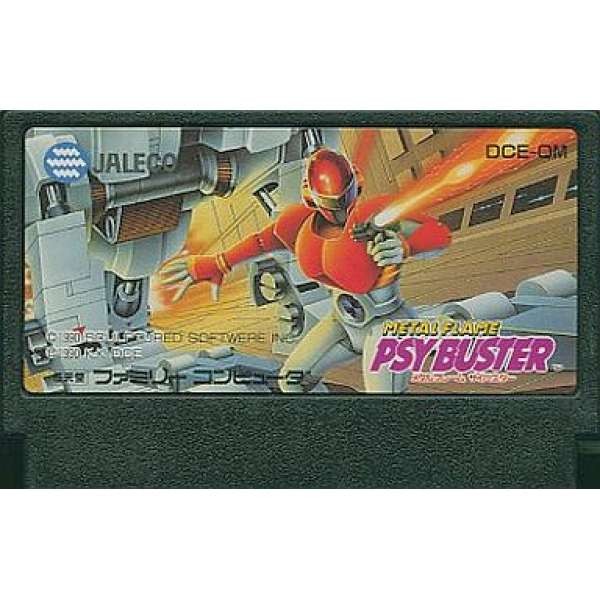
金屬戰士 (無書盒)
 1990-12-14
由 Melenese(隸屬於 Jaleco)於 1990 年在任天堂 Famicom(紅白機)上推出的《金屬戰士》(Metal Flame Psybuster / メタルフレーム サイバスター),是結合橫向捲軸動作與地圖探索要素的科幻機甲遊戲。
雖然名稱中出現「Psybuster(賽巴斯塔)」,但需要特別說明的是,本作與 Bandai Namco 旗下《超級機器人大戰》系列中的著名機體「風之魔裝機神」並沒有任何關聯。它擁有完全獨立的世界觀與設定,是一款容易讓玩家產生誤會的作品。
在表現上,試圖挑戰紅白機對「大型機甲戰鬥」的極限。主角機體的比例明顯較大,透過有限的 8 位元色彩呈現出不錯的金屬質感。場景設計以高科技基地、地下迷宮與外星地表為主,營造出封閉而壓迫的戰場氛圍。音樂則帶有沉重的電子風格,讓玩家在深入敵陣時始終感受到孤立無援的危機感。
遊戲最大的特色在於雙重型態系統。玩家操控的原型機 Psybuster 可以在機器人與戰鬥機之間自由切換。機器人型態擁有較強的火力與跳躍能力,適合在狹窄空間中進行精準戰鬥;戰鬥機型態則能高速飛行,適合穿越大範圍敵軍與開闊區域。這種切換不只是移動方式的變化,更是整個關卡設計的核心。
劇情設定在未來的星際戰爭中。敵對勢力開發出名為「Metal Flame」的超級兵器,對銀河構成巨大威脅。玩家作為王牌駕駛員,單機潛入敵方要塞行星,在層層防禦與迷宮結構中前進,最終目標是摧毀中央核心,瓦解敵方計畫。整體敘事雖然簡潔,但成功營造出一種「孤軍深入敵後」的壓迫感。
在操作機制上,這並非單純的動作遊戲,而是強調策略與資源管理。所有行動,包括飛行、使用特殊武器以及受到攻擊,都會消耗能源(EN)。當能源耗盡時,機體性能會明顯下降,甚至可能導致任務失敗,因此必須精確控制每一次變形與攻擊時機。地圖採用迷宮式設計,玩家需要反覆探索、尋找開關與升級裝備,並記住複雜的路線結構。關卡最後的 Boss 戰則多半是大型機械敵人,需要觀察攻擊模式並靈活運用型態切換來應對。
在市場評價方面,被認為是一款風格冷峻且帶有實驗性的作品。由於名稱上的誤導,不少玩家原本期待與《超級機器人大戰》相關的內容,結果發現完全不同,反而成為當時一段有趣的話題。評論普遍指出,本作的操作手感偏硬核,特別是變形後的慣性控制與敵人配置,都需要高度熟練才能駕馭。也正因如此,它在大眾市場的知名度不算突出,但在核心機甲玩家之間,卻因其強調重量感與技術性的設計而獲得一定評價。
從歷史角度來看,它是紅白機上少數將「資源管理」與「動作操作」結合的機甲作品之一。雖然不像 重裝機兵 或 Transformers: Convoy no Nazo 那樣廣為人知,但仍在復古玩家圈中佔有一席之地。
最令人印象深刻的時刻,往往發生在能源即將耗盡的危急關頭。當玩家被迫在極短時間內切換為飛行型態,抓準防禦系統的空隙高速穿越,那種在壓力之下完成突破的成就感,正是這款作品最迷人的地方。你是否也曾在那座錯綜複雜的要塞中,一邊手繪地圖,一邊反覆嘗試,只為找出唯一的生路?
Developed by Melenese, a subsidiary of Jaleco, Metal Flame Psybuster (メタルフレーム サイバスター) was released for the Nintendo Famicom in 1990. It is a science-fiction mecha action game that blends side-scrolling gameplay with exploration elements.
Despite the name “Psybuster,” it is important to clarify that this title has no connection to the famous “Cybuster” unit from the Super Robot Wars series by Bandai Namco. The game features its own completely original setting, which led to some confusion among players at the time.
Technically, Metal Flame Psybuster attempts to push the limits of depicting large-scale mecha combat on the 8-bit Famicom. The protagonist’s machine is relatively large on screen, with a convincing metallic appearance given the hardware limitations. The environments mainly consist of futuristic bases, underground labyrinths, and alien terrains, creating a tense and enclosed atmosphere. The music leans toward heavy, electronic tones, reinforcing the feeling of isolation behind enemy lines.
One of the game’s defining features is its dual transformation system. The player-controlled prototype unit can freely switch between a humanoid robot form and a fighter jet form. The robot form offers stronger firepower and better jumping ability, making it suitable for tight indoor combat. The jet form, on the other hand, allows high-speed flight, ideal for traversing open areas or bypassing heavily defended zones. This transformation mechanic is not just cosmetic—it is central to both level design and strategy.
The story is set during a futuristic interstellar war. An enemy force has developed a powerful super-weapon known as “Metal Flame,” posing a threat to the entire galaxy. The player takes on the role of an ace pilot sent alone into a massive enemy fortress planet. The mission is to break through multiple defensive layers, navigate maze-like structures, and ultimately destroy the central core to eliminate the threat. While the narrative is minimal, it effectively conveys a sense of isolation and high-stakes infiltration.
In terms of gameplay, the title emphasizes strategy and resource management rather than pure action. Every action—flying, using special weapons, and even taking damage—consumes energy (EN). If energy is depleted, the unit’s performance drops significantly, potentially leading to mission failure. This forces players to carefully manage resources and choose when to transform or attack. The maze-like level design further adds to the challenge, requiring players to explore, locate switches and upgrades, and memorize complex routes. Boss encounters typically feature large mechanical enemies that demand pattern recognition and skillful use of transformation.
Reception-wise, Metal Flame Psybuster is often regarded as a challenging and somewhat experimental title. The misleading name caused initial confusion among players expecting a connection to Super Robot Wars. Critics noted its demanding controls, especially the inertia involved in transformation and movement, as well as its unforgiving enemy placement. While it never achieved mainstream popularity, it gained a degree of respect among hardcore mecha enthusiasts for its weighty mechanics and technical ambition.
Historically, it stands out as one of the few Famicom titles to combine action gameplay with resource management in a mecha setting. Although it is less well-known than titles like Metal Max or Transformers: Convoy no Nazo, it still holds a unique place in retro gaming circles.
One of the most memorable experiences in the game comes when your energy is nearly depleted, forcing you to switch into jet form at the last possible second and dash through a narrow defensive gap before shutdown. That intense, split-second decision-making perfectly captures the game’s core appeal. Do you remember how many times you had to sketch out the fortress map just to find the correct path forward?
運費計算方式:
貨款滿1000元運費外加90元
貨款1000以下:買1件運費外加 60元,買2件運費外加 70元,
買3件運費外加 80元 ,買4件運費外加 90元
貨到付款外加30元手續費
外島及大陸地區運費另計
付款方式:
線上刷卡:本站採用Paypal線上刷卡
虛擬帳號匯款:屬於您專屬的虛擬帳戶,方便站長查帳使用,本站強力推薦
實體ATM匯款:請將匯款帳號記錄下來至各大銀行ATM提款機轉帳
超商條碼繳費:請列印本站提供的條碼至四大超商繳費
線上轉帳:透過玉山銀行線上ATM轉帳(此系統只支援IE瀏覽器)
貨到付款:本站採用黑貓宅急便貨到付款
其他注意事項:
如需購買線上點數卡請直接跟站長連絡,本站不提供點數卡的線上付款
-
金屬戰士 (無書盒)
- 定 價: 6,195円
- 售 價: 0.00
- 庫存量: 0 套
- 已賣出: 0 套
人氣指數: 0 / 6 顆星