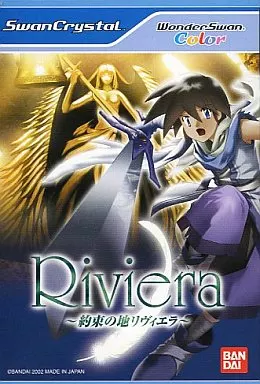
約束之地里費艾拉
 2002-07-12
《約束之地:里費艾拉》最早於2002年在WonderSwan Color推出,由以創意系RPG著稱的Sting製作、Bandai發行,屬於節奏明快的回合制角色扮演遊戲。雖然WSC主機本身在市場上並不成功,使得本作在剛推出時並未受到太大關注,但憑藉著獨特的玩法、深刻的劇情、細膩的人物塑造與極具質感的美術表現,逐漸被視為「懂的人都會大力推薦」的隱藏名作。後續作品陸續在GBA(2004)、PSP(2006、2007 SPECIAL EDITION)平台重製與移植,使它真正走進更多玩家視野,並在 2024 年以 Nintendo Switch 的全新 HD Remaster 之姿再度回歸,吸引了新舊玩家共同關注。
本作的角色設計由高津幸央打造,怪物則由岩永悅宜負責;到GBA與PSP版本,角色美術改由人氣插畫家戸部淑重新繪製,使其視覺風格變得更成熟雅致。遊戲的音樂、像素畫面與精緻劇本一直是玩家間最常被提及的優點,尤其GBA版的像素畫質甚至被認為是掌機時代中的一大代表作。
故事背景以北歐神話為基礎,描述神界與魔界曾爆發毀天滅地的「神魔戰爭」。儘管神界最終成功擊退魔族,並將戰後的淨化之地命名為「里費艾拉」,交由精靈一族治理,但神明亦在戰爭中消失,只留下作為最終手段的「神罰」封印。千年後,沉寂已久的上級魔族「地獄眾」再度甦醒。為阻止悲劇重演,神界打算啟動神罰,寧可將整片里費艾拉與所有居民一併毀滅,也不願冒魔族復甦的風險。主角艾因與同伴雷達因此被派遣為「死神天使」,肩負啟動神罰的任務降臨下界。
然而艾因在與人類、精靈,以及四位重要女主角接觸後,逐漸看見這片土地的溫暖與生命力,對神界的命令產生動搖,也開始懷疑身為「神之武器」的自己是否真的只能盲目執行毀滅。他在旅程中一方面要對抗甦醒的地獄眾威脅,另一方面也必須面對自己心中的掙扎,在神意與人性之間做出影響整片樂園命運的抉擇。
遊戲在系統上具有強烈特色。與一般RPG不同,主角無法自由在地圖走動,而是透過畫面中的指令點進行探索,這種被稱為「觸發器系統」的方式讓節奏更加快速、緊湊,也非常適合掌機操作。觸發行動有時會消耗TP,而TP必須透過戰鬥來獲得,使探索與戰鬥之間形成巧妙的循環。
戰鬥為回合制,卻相當策略性。每場戰鬥開始前,只能挑選四件武器與道具帶入戰場,且三名角色共用同一組資源。武器皆有耐久,並會因使用者不同而展現截然不同的技能,有人能熟練揮劍,有人卻只會把劍當石塊丟出去,使戰鬥常常呈現出令人會心一笑的趣味性。成長方式也不是傳統的升級制度,而是藉由反覆使用武器來習得技能與提升能力,使養成變得更具個性。隨著戰鬥累積的 OverDrive 還能釋放華麗的 OverSkill,其帶有動畫演出,是玩家最喜愛的爽快亮點之一。
由於主角身邊多為女性角色,遊戲中也融入相當份量的好感度系統。劇情選項會影響少女們對艾因的情感傾向,也會改變不同章節的劇情與最後的結局。最具話題性的莫過於「沐浴事件」,在早期版本中角色會以全裸呈現,被視為玩家間的經典話題;PSP 版本因審查刪除此畫面,但後續SPECIAL EDITION又以「泳裝版本」重現。
多年來,《里費艾拉》始終在玩家圈中享有極高評價。許多人稱讚其美術風格令人難以忘懷:GBA 版的像素畫面常被視為掌機時代的頂點,而PSP版的立繪則展現角色更成熟、優雅的氛圍。音樂部分同樣受到好評,從戰鬥曲到劇情曲都帶著濃厚的幻想氣息,強烈提升情緒渲染力。再加上Sting特有的創意系統設計、扎實劇情與極具魅力的角色群,使這款作品被視為掌機RPG中的珍貴名作。多次移植則讓它跨越世代持續被提起,HD Remaster更讓新玩家也能體驗這段經典旅程。
總結來說,《約束之地:里費艾拉》以獨特玩法、溫柔而深刻的敘事、細膩美術與豐富角色魅力,成為許多玩家心中難以取代的作品,也被普遍認為是Sting所屬「Dept. Heaven 系列」中最受喜愛的一部。
Riviera: The Promised Land was first released in 2002 for the WonderSwan Color, developed by Sting—known for its inventive, unconventional RPGs—and published by Bandai. The game is a fast-paced, turn-based RPG. Although the WSC console itself failed to gain traction in the market, limiting the game’s initial exposure, its distinctive gameplay, profound narrative, finely crafted characters, and high-quality art direction gradually earned it a reputation as a hidden gem—one of those “if you know, you know” masterpieces. Later remakes and ports on the GBA (2004) and PSP (2006, 2007 SPECIAL EDITION) brought the title to a wider audience, and its 2024 Nintendo Switch HD Remaster rekindled attention from both longtime fans and newcomers.
Character designs for the original release were created by Yukio Takatsu, while monster designs were handled by Etsunobu Iwanaga. The GBA and PSP versions introduced new character artwork by popular illustrator Yoko ToBe, giving the visuals a more refined and elegant tone. The game’s music, pixel art, and polished storytelling have long been praised by players, with the GBA version’s sprite work often regarded as one of the finest examples of handheld pixel art of its era.
The story draws heavily from Norse mythology, centering on a catastrophic war between the gods and demons. Although the gods ultimately triumphed and purified the ravaged land—renaming it “Riviera” and entrusting it to the stewardship of the Sprites—they vanished from the world, leaving behind the “Divine Punishment,” a final fail-safe sealing technique. A thousand years later, the long-dormant high demons known as the “Infernos” awaken once more. To prevent another calamity, the gods plan to activate the Divine Punishment, choosing to annihilate all of Riviera and its inhabitants rather than risk the demons’ revival. Ein and Ledah, designated as “Grim Angels,” are dispatched to the mortal realm to carry out this devastating mission.
However, as Ein encounters humans, Sprites, and the four central heroines, he begins to witness the warmth, vitality, and everyday joys of Riviera. His faith in the gods’ decree begins to waver, and he finds himself questioning whether a “weapon of the gods” must truly obey a command that brings only destruction. Throughout his journey, Ein must confront both the threat of the returning Infernos and the turmoil within himself, ultimately making choices that determine the fate of this fragile paradise.
The gameplay system is one of the title’s defining features. Unlike traditional RPGs, players cannot freely move across maps; exploration is performed by selecting on-screen command prompts, a design known as the Trigger System. This approach creates a tight, fast-paced rhythm that fits handheld gaming perfectly. Some actions consume TP, which must be earned through battles, forming a balanced loop between exploration and combat.
Combat is turn-based yet highly strategic. Before each encounter, players may bring only four weapons or items into battle, and the three party members share the same pool. All weapons have limited durability, and each character wields them differently: one may expertly swing a sword, while another might awkwardly throw it like a rock—adding both charm and tactical depth to combat. Progression does not rely on traditional leveling; instead, characters grow by repeatedly using weapons to learn skills and raise stats, allowing highly personalized development. OverDrive accumulated in battle can be used to unleash powerful OverSkills, often accompanied by animated cut-ins that fans love.
Because most of the party members are female, the game incorporates a significant affection system. Story choices influence how the heroines feel about Ein, shaping various story branches and determining the game’s ending. One of the most talked-about elements is the famous “bath scene,” where early versions depicted full nudity—an aspect widely remembered among fans. The PSP version removed this due to stricter content review, but the SPECIAL EDITION brought it back in swimsuit form.
Over the years, Riviera: The Promised Land has consistently enjoyed high praise within the gaming community. Many players regard its art direction as unforgettable: the GBA pixel art is often considered a pinnacle of handheld graphics, while the PSP character portraits add maturity and elegance. The soundtrack is equally acclaimed, with battle themes and event tracks that evoke a strong fantasy atmosphere and emotional resonance. Combined with Sting’s signature creative systems, a compelling narrative, and a cast full of charm, the game is often regarded as one of the standout handheld RPG classics. Multiple ports have allowed it to remain relevant across generations, and the HD Remaster ensures that new audiences can continue discovering this beloved title.
In summary, Riviera: The Promised Land stands out for its distinctive mechanics, gentle yet profound storytelling, refined visual style, and memorable characters. It remains an irreplaceable favorite among many players and is widely considered the most beloved entry in Sting’s Dept. Heaven series.
運費計算方式:
貨款滿1000元運費外加90元
貨款1000以下:買1件運費外加 60元,買2件運費外加 70元,
買3件運費外加 80元 ,買4件運費外加 90元
貨到付款外加30元手續費
外島及大陸地區運費另計
付款方式:
線上刷卡:本站採用Paypal線上刷卡
虛擬帳號匯款:屬於您專屬的虛擬帳戶,方便站長查帳使用,本站強力推薦
實體ATM匯款:請將匯款帳號記錄下來至各大銀行ATM提款機轉帳
超商條碼繳費:請列印本站提供的條碼至四大超商繳費
線上轉帳:透過玉山銀行線上ATM轉帳(此系統只支援IE瀏覽器)
貨到付款:本站採用黑貓宅急便貨到付款
其他注意事項:
如需購買線上點數卡請直接跟站長連絡,本站不提供點數卡的線上付款