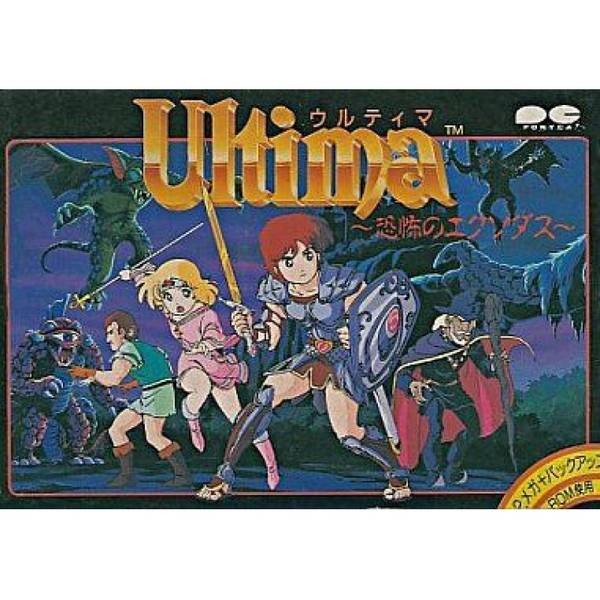
創世紀:恐怖的出發 (無書盒)
 1987-10-09
1987 年於紅白機(FC)推出的《創世紀:恐怖的出發》(Ultima III: Exodus,日本版標題為《ウルティマ 恐怖のエクソダス》),是經典西方 RPG 系列Ultima (series)的第三代作品移植版。
如果說《創世紀 IV:往聖者的道路》著重於「美德與人格修煉」,那麼《創世紀 III:Exodus》則更偏向戰鬥與生存壓力,整體氛圍也更為詭譎與緊張。同時,它也被認為是早期影響日本 RPG 發展的重要作品之一,對後來如Dragon Quest等遊戲的設計理念帶來啟發。
故事發生在不列顛尼亞(Britannia),在邪惡巫師蒙丹(Mondain)與米娜疵(Minax)相繼被擊敗之後,一個名為「Exodus」的神祕存在從海底甦醒。它既非人類也非惡魔,而是擁有巨大毀滅力量的未知生命體。整個世界再次陷入混亂與災難之中,不列顛王因此召集勇者,前往火島展開最終討伐行動。
在系統設計上,最大的特色是高度自由的隊伍組建。一開始可以從多種種族(人類、精靈、矮人、哈比人等)與職業(戰士、法師、僧侶、小偷、幻術師等)中自由組成四人小隊,同時還能自行分配力量、敏捷、智力等能力值,這在當時的家用主機 RPG 中相當先進。
戰鬥採用戰棋式方格系統。角色必須移動到敵人旁邊才能進行攻擊,而遠程武器與魔法則依賴射程與方向判定,使戰鬥更強調位置與策略,而非單純數值高低。
此外,還加入「糧食系統」,成為遊戲難度的重要來源。隊伍在大地圖移動會持續消耗食物,一旦耗盡,角色將持續扣血直至死亡,因此資源管理成為生存的關鍵要素。
FC 版本由 Pony Canyon 移植,整體風格進行明顯的「日式化」改造。原本偏西方寫實、陰森的畫風,被調整為更可愛的點陣角色風格;音樂則由後藤次利重新編曲,使整體氛圍更具節奏感與記憶點。
地下城部分採用第一人稱 3D 迷宮視角,在 8-bit 主機上營造出強烈的沉浸感,但同時也讓玩家更容易迷路,增加探索難度。
整體評價方面,以高難度著稱。前期資源匱乏、敵人強度高,使玩家經常陷入生存壓力之中。但最具代表性的設計,是最終 Boss「Exodus」的擊敗方式並非單純戰鬥,而是需要收集四張神祕卡片,並在正確時機於「電腦裝置」中使用,結合奇幻與科幻元素,展現出極為前衛的設計思維。
總結來說,《創世紀:恐怖的出發》是一款兼具策略、生存與探索壓力的經典 RPG。它不只奠定日後家用主機 RPG 的基本架構,也展現出早期西方 RPG 對日本遊戲設計的深遠影響。
Released in 1987 on the Famicom (FC), Ultima III: Exodus is the third main entry in the legendary Western RPG series Ultima (series), and its console port was titled Ultima: Exodus (ウルティマ 恐怖のエクソダス) in Japan.
If Ultima IV: Quest of the Avatar is about the cultivation of virtue, then Ultima III: Exodus represents the series at its most combat-driven and mysterious phase. It is also widely recognized as one of the early influences that helped shape the design philosophy of Japanese RPGs such as Dragon Quest.
The story follows the aftermath of earlier conflicts in Britannia. After the defeat of Mondain and Minax, a new entity known as Exodus emerges from beneath the sea. It is neither human nor demon, but a strange and terrifying being with immense destructive power. Britannia falls into chaos once again, and the King summons adventurers to journey into the dangerous Fire Island and eliminate this ultimate threat.
One of the defining features of this entry is its high degree of party customization. At the start of the game, players assemble a four-person party from various races—such as humans, elves, dwarves, and hobbits—and multiple character classes including warriors, mages, clerics, thieves, and illusionists. Players can also allocate attributes like strength, intelligence, and agility, which was extremely advanced for a console RPG of its time.
Combat takes place on a tactical grid-based battlefield. Characters must physically move next to enemies in order to attack, while ranged weapons and spells depend on line-of-sight, range, and positioning. This adds a strong layer of strategic depth uncommon in early Famicom RPGs.
Another notable mechanic is the food system, which makes survival itself part of the challenge. Traveling consumes supplies, and running out of food causes continuous HP loss that can eventually lead to party death. This creates constant pressure in the early game and reinforces resource management as a core survival element.
The Famicom version by Pony Canyon significantly “Japanized” the original PC release. Character designs were transformed into more colorful, chibi-style visuals, replacing the darker Western aesthetic. The soundtrack, rearranged by Tsugutoshi Gotō, is especially memorable, with energetic and catchy themes that even received soundtrack releases.
Dungeons are presented in first-person pseudo-3D view, which was highly immersive for an 8-bit system, though often disorienting for players due to its maze-like structure.
In terms of reception, the game is known for its punishing difficulty. Early survival is harsh, and players frequently struggle with limited money, food shortages, and powerful random encounters. However, its most famous feature is its unconventional final objective: defeating Exodus is not achieved through direct combat alone, but by collecting four mysterious cards and using them correctly within a computer system. This fusion of fantasy and science-fiction elements felt remarkably ahead of its time.
Overall, Ultima III: Exodus stands as a landmark RPG that helped introduce Western role-playing concepts to Japanese home consoles. Its structure of towns, overworld exploration, dungeons, and turn-based combat became a foundation that influenced countless later titles.
It remains a game that disguises itself with a charming exterior but hides a harsh, almost survival-driven core—rewarding careful planning, exploration, and persistence over simple grinding.
運費計算方式:
貨款滿1000元運費外加90元
貨款1000以下:買1件運費外加 60元,買2件運費外加 70元,
買3件運費外加 80元 ,買4件運費外加 90元
貨到付款外加30元手續費
外島及大陸地區運費另計
付款方式:
線上刷卡:本站採用Paypal線上刷卡
虛擬帳號匯款:屬於您專屬的虛擬帳戶,方便站長查帳使用,本站強力推薦
實體ATM匯款:請將匯款帳號記錄下來至各大銀行ATM提款機轉帳
超商條碼繳費:請列印本站提供的條碼至四大超商繳費
線上轉帳:透過玉山銀行線上ATM轉帳(此系統只支援IE瀏覽器)
貨到付款:本站採用黑貓宅急便貨到付款
其他注意事項:
如需購買線上點數卡請直接跟站長連絡,本站不提供點數卡的線上付款
-
創世紀:恐怖的出發 (無書盒)
- 定 價: 6,195円
- 售 價: 0.00
- 庫存量: 0 套
- 已賣出: 0 套
人氣指數: 0.7 / 6 顆星